
Event recap
Reimagining Constitutional Reform in Sri Lanka: An OTI–NEXUS Brainstorming Session
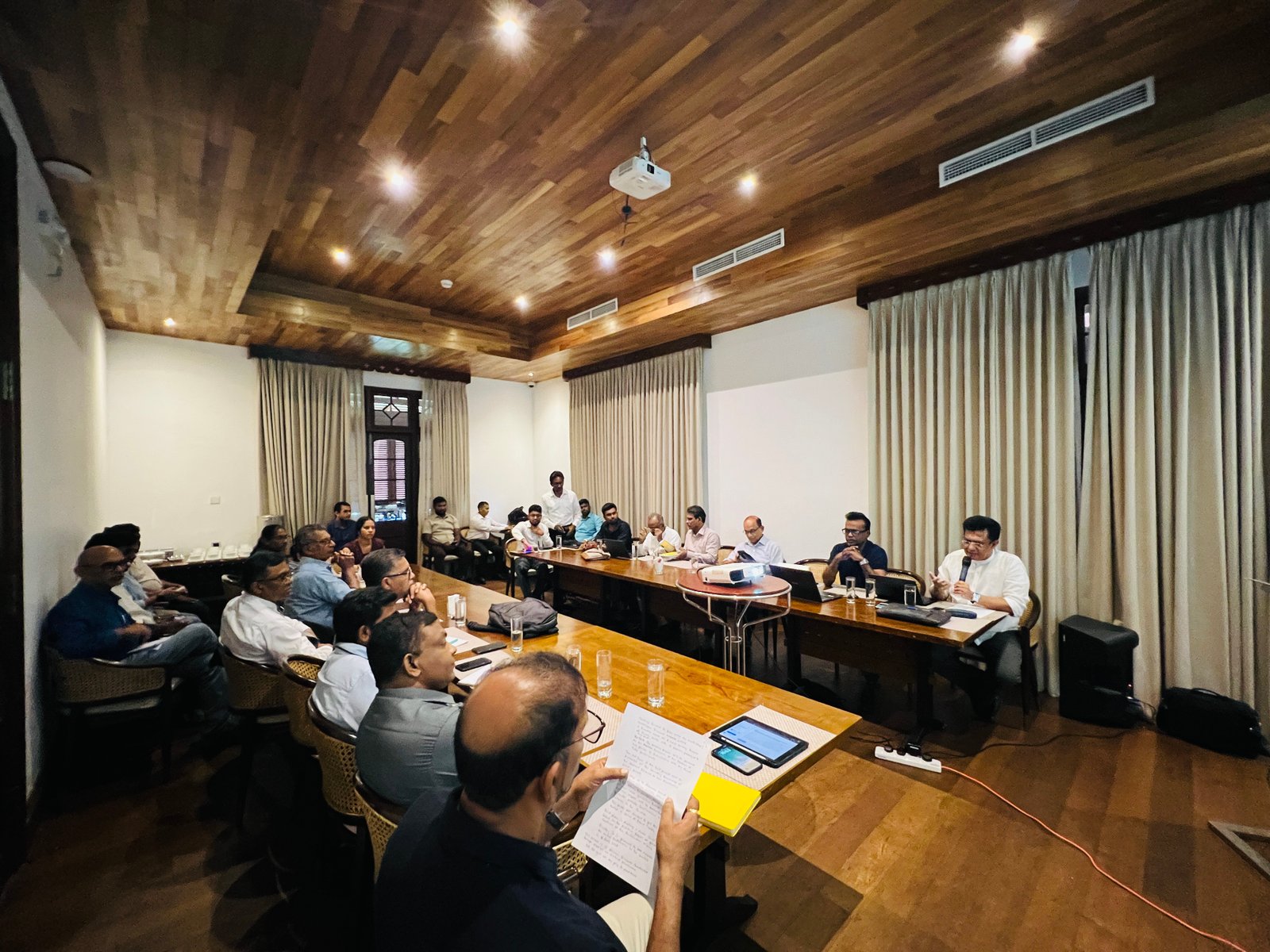
A collaborative brainstorming session organized by One Text Initiative (OTI) and the NEXUS Research Group to explore a long-term, inclusive, and non-partisan approach to constitutional reform in Sri Lanka. The discussion focused on shared principles, institutional design, public participation, and the use of technology to support a nationally owned constitutional vision.
Date
17 December 2025
Venue
80 Club of Colombo
Recorded by
OneText facilitation team
Purpose of the Session
This was the second brainstorming session organized by OneText Initiatives (OTI) and the NEXUS Research Group. The objective was to design an inclusive, non-partisan, and nationally owned constitutional reform process for Sri Lanka, focusing on developing a model constitution rather than immediately drafting a country-specific one.
This was the second brainstorming session organized by OneText Initiatives (OTI) and the NEXUS Research Group. The objective was to design an inclusive, non-partisan, and nationally owned constitutional reform process for Sri Lanka, focusing on developing a model constitution rather than immediately drafting a country-specific one.
Rationale
Sri Lanka has not achieved a durable, consensus-based constitution since independence. Past constitutional reforms were driven largely by power politics rather than public participation. The initiative responds to repeated failures of reform efforts and aims to create a future-oriented, inclusive constitutional framework.
Sri Lanka has not achieved a durable, consensus-based constitution since independence. Past constitutional reforms were driven largely by power politics rather than public participation. The initiative responds to repeated failures of reform efforts and aims to create a future-oriented, inclusive constitutional framework.
Vision and Principles
The process emphasizes constitutionalism, human dignity, equality, rule of law, accountability, plural democracy, environmental justice, and international responsibility. It is designed to be participatory, transparent, and citizen-led, independent of political parties.
The process emphasizes constitutionalism, human dignity, equality, rule of law, accountability, plural democracy, environmental justice, and international responsibility. It is designed to be participatory, transparent, and citizen-led, independent of political parties.
Structure of the Process
The reform effort is planned as a multi-year process, beginning with position papers, followed by a constitutional vision, drafting multiple constitutional options, extensive stakeholder engagement, and final publication by around 2027.
The reform effort is planned as a multi-year process, beginning with position papers, followed by a constitutional vision, drafting multiple constitutional options, extensive stakeholder engagement, and final publication by around 2027.
Cluster-Based Framework
The work is organized into five thematic clusters:
The work is organized into five thematic clusters:
- 1. Nature of the State and Sovereignty
- 2. Structure of Government and Governance
- 3. Judiciary and Fundamental Rights
- 4. Fiscal and Monetary Governance
- 5. Cross-Cutting Themes (gender, environment, ethnicity, technology, directive principles)
Each cluster is led by subject-matter experts and supported by sub-committees.
Use of Technology
A public digital platform supports transparency and participation. Features include a living draft constitution, public comments, AI-assisted comparison tools, and a research library of local and international constitutional documents.
A public digital platform supports transparency and participation. Features include a living draft constitution, public comments, AI-assisted comparison tools, and a research library of local and international constitutional documents.
Key Discussions
Participants strongly critiqued executive presidentialism, linking it to weak accountability and economic mismanagement. The need for strong checks and balances, power-sharing, judicial independence, and fiscal responsibility was emphasized.
Participants strongly critiqued executive presidentialism, linking it to weak accountability and economic mismanagement. The need for strong checks and balances, power-sharing, judicial independence, and fiscal responsibility was emphasized.
Overall Outcome
The session confirmed a shared roadmap, core values, institutional structure, and commitment to a long-term, inclusive constitutional reform process grounded in both principles and political realities.
The session confirmed a shared roadmap, core values, institutional structure, and commitment to a long-term, inclusive constitutional reform process grounded in both principles and political realities.
Event gallery
More from the dialogue record
All events →
Jul 18, 2026
Jaffna
Dialogue with ITAK Leadership on the Model Constitution Process
The One-Text Initiative met with C. V. K. Sivagnanam, Acting Leader of the Illankai Tamil Arasu Kachchi (ITAK), and M. A. Sumanthiran, Acting General...
Read event recap →
Jul 18, 2026
Jaffna
Dialogue with EPDP on the Model Constitution Process
The One-Text Initiative met with Douglas Devananda of the Eelam People’s Democratic Party (EPDP) in Jaffna for a constructive discussion on Sri Lanka’...
Read event recap →Knowledge library
Publications behind the dialogue
Policy briefs, research papers, and monthly committee summaries that inform every convening.
Browse publications →